What is NFP (Non-Farm Payrolls) and How it Moves the Forex Market?
NFP forex trading turns the first Friday of every month into something most traders dread and anticipate in equal measure. No other scheduled data release moves currency pairs this fast, this far, or this unpredictably.
So if you've ever watched EUR/USD drop 80 pips in under a minute and wondered why, this article's for you. We'll cover what the Non-Farm Payrolls report actually measures, why it hits markets so hard, and how to approach it without blowing your account on a bad fill.
What is the NFP Report?
The Non-Farm Payrolls report is published by the U.S. Bureau of Labor Statistics on the first Friday of each month, typically at 8:30 AM Eastern Time. The Non-Farm Payrolls report measures the net change in employment across all non-agricultural sectors of the U.S. economy during the previous month. Farm workers, household employees, and certain government roles are excluded, but the vast majority of the private-sector workforce is covered.
The headline figure is a single number: how many jobs were added or lost. But the report also contains unemployment rate data, average hourly earnings, and prior-month revisions. Each of those components can trigger its own market reaction, which is why the release often causes volatility that stretches across several minutes, not just the first tick.
Employment is a leading indicator of economic health. When businesses hire aggressively, it signals confidence in future demand. When hiring stalls, the opposite tends to follow. The Federal Reserve watches NFP closely because its dual mandate covers both maximum employment and price stability, so a strong or weak jobs number can shift rate expectations in a matter of seconds.
That rate sensitivity is exactly what makes the report so important for forex traders.
Why Does the NFP Report Move Forex Markets So Dramatically?
Currency pricing is, at its core, a reflection of where interest rates are expected to go. A stronger-than-expected NFP figure typically raises the probability that the Federal Reserve will hold rates higher for longer, or raise them outright. That pushes the U.S. dollar higher against major pairs like EUR/USD, GBP/USD, and USD/JPY. A weaker-than-expected reading tends to do the opposite.
But the reaction isn't really about the number itself. It's about the gap between what the market expected and what was actually reported. If analysts forecast 180,000 new jobs and the report prints 280,000, you'll typically see a sharp dollar rally and spiking volatility within seconds. A number that lands exactly at consensus? The market may barely flinch.
EUR/USD regularly moves well beyond its typical daily range within the first 15 minutes of an NFP release. That gap represents real opportunity, but also real danger, particularly for traders who aren't ready for how quickly it all happens.
The relationship between NFP and the Fed became especially pronounced during the 2024 rate cycle. As the Fed began cutting rates in late 2024, every jobs report carried elevated significance because traders were recalibrating the pace of easing in real time. Each print felt like a referendum on the whole rate path, not just one month of data.
How to Read the NFP Report Before You Trade
Reading the NFP isn't just about watching the headline number. You need to understand what you're actually comparing against. Before the release, the market forms a consensus estimate, aggregated from economist forecasts, and prices that expectation into current rates. Your job is to assess what's likely to surprise relative to that consensus, not what's likely to happen in absolute terms.
Follow these steps before each NFP release:
- Check the consensus estimate. This is widely published on economic calendars the week before. Note the range of forecasts, not just the median. A wide range signals higher uncertainty.
- Review the prior month's figure. A large revision to last month's number can be as market-moving as the current headline.
- Watch average hourly earnings. This sub-component feeds directly into inflation expectations. A strong jobs number paired with rising wages is significantly more bullish for the dollar than jobs growth alone.
- Check the unemployment rate. If it drops below the Fed's estimated neutral level, expect a more hawkish market interpretation.
- Assess the broader macro context. During periods of Fed easing, a weak NFP may accelerate dollar selling far more aggressively than the same number would in a neutral environment.
Some brokers provide integrated economic calendars that include consensus ranges and historical deviation data. If your platform doesn't offer that contextual layer, you're going into the release without a full picture. Not ideal.
What are the Best NFP Trading Strategies?
There's no single right answer here. Different traders approach NFP very differently depending on their risk tolerance, capital, and strategy type.
Before the release (pre-NFP positioning): Some traders take directional positions in the days leading up to NFP based on correlated data, including ADP employment figures, ISM manufacturing employment indices, and jobless claims.
This approach carries lower volatility risk but requires a strong macro read. It doesn't always work. The ADP report, for instance, has historically diverged from NFP more than the market expects, sometimes by a wide margin.
During the release (reactive trading): This is the highest-risk approach. Spreads, the difference between the bid and ask price on a currency pair, widen sharply in the seconds around the release. Liquidity, meaning the availability of willing buyers and sellers at any given price, drops momentarily. Slippage, where your order fills at a worse price than you expected, is pretty common. Traders entering at the moment of release are often trading on pure momentum with little ability to control their entry price.
After the release (fade or follow): Once the initial spike settles, typically 15 to 30 minutes post-release, some traders look for continuation setups or counter-trend fades if the initial move looks overextended. This is often where cleaner, more structured opportunities sit, because the noise has cleared and the market has had time to digest what the number actually means.
Brokers with tight spreads and fast execution matter enormously during NFP. Inveslo offers competitive spreads on major pairs, which can reduce the friction cost of trading high-volatility events like non-farm payrolls releases, particularly if you're using a reactive intraday approach.
What Risks Does NFP Forex Trading Carry?
NFP trading is not appropriate for every trader. The same volatility that creates opportunity can devastate an underprepared account.
The biggest structural risk is spread widening. Even on EUR/USD, one of the most liquid pairs in the world, spreads can spike from a fraction of a pip to several pips in the seconds around the release. You may enter a trade at the price you see on screen, only to find your actual fill is significantly worse.
Leverage amplifies this considerably. Leverage means controlling a position larger than your actual capital allows, and it can turn a 50-pip adverse move into a loss that exceeds your initial margin deposit.
Stop-loss orders help, but they are not guaranteed to execute at the specified price during high-volatility events. Gap risk, where price jumps past your stop level without triggering it at that exact price, is a real problem during NFP. Worth knowing before you rely on stops as your only protection.
Key Takeaways
NFP forex trading rewards preparation far more than it rewards speed. The traders who do well around non-farm payrolls releases are typically those who have done the analysis before the number drops, not those reacting in real time.
- Consensus deviation drives the move: The gap between expected and actual figures matters more than the raw number.
- Spread and slippage costs: Account for them before sizing any NFP trade, especially reactive entries.
- Post-release setups: The 15 to 30 minutes after initial volatility often offer cleaner technical entries than the release itself.
- Leverage discipline: Keep position sizes smaller than usual around NFP given the elevated volatility environment.
FAQ
Q1. What time does the NFP report come out?
A. The Non-Farm Payrolls report is released at 8:30 AM Eastern Time on the first Friday of each month. That translates to 1:30 PM GMT in winter and 12:30 PM GMT during daylight saving time. Mark it on your calendar before trading sessions that week.
Q2. Which currency pairs move most during NFP?
A. Major USD pairs are the most reactive. EUR/USD, GBP/USD, USD/JPY, and USD/CHF tend to see the sharpest moves. Dollar-indexed crosses can also spike significantly, particularly if the NFP number deviates widely from the market consensus estimate.
Q3. Should beginners trade the NFP release directly?
A. Generally, no. The combination of spread widening, slippage risk, and fast price movement makes the moment of release difficult to manage without experience. Beginners are better served observing two or three NFP events live before committing real capital to reactive strategies.
Q4. How long does NFP volatility usually last?
A. Initial volatility typically peaks within the first 5 minutes and begins to settle within 15 to 30 minutes. However, the broader market repricing can extend across the full trading session, particularly if the number significantly shifts expectations about Federal Reserve policy direction.
Related articles
 ForexInveslo
What is the Consumer Price Index (CPI)?
The Consumer Price Index (CPI) tracks the average change over time in prices consumers pay for a representative basket of goods and services. It is one of the main measures used to monitor consumer inflation.
 ForexInveslo
What is a Trading Journal & How Do Traders Use It?
A trader can remember a big winner for months and forget three poorly planned trades from the same week. That is one reason relying on memory makes trade review difficult.
 ForexInveslo
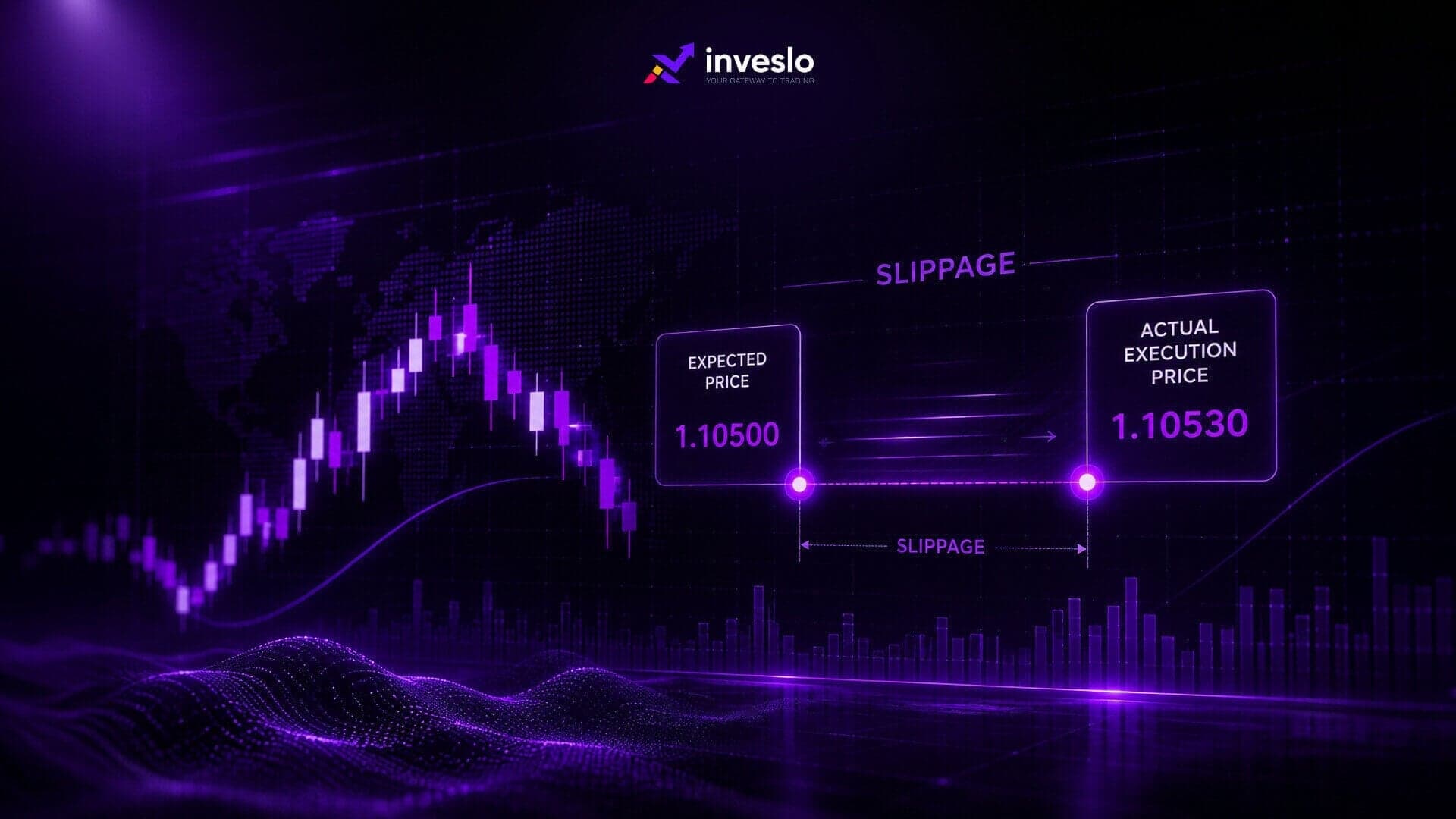
Slippage in Trading: What it is and How to Reduce it?
Slippage in trading costs most retail traders more than they realise, and it's rarely discussed until after the damage is done. You place an order at one price, it fills at another, and suddenly your trade is already underwater before the market's moved a tick against you. It happens fast.