Most traders don't realize how much session timing is costing them. Forex trading sessions shape nearly every variable that matters: your spreads, the size of the moves you can catch, and whether your strategy even has an edge in a given hour. The market's technically open 24 hours on weekdays, but that's a bit like saying a restaurant is open all night when the kitchen shuts at 10. So if you've ever felt like the market was dead when you were watching it, or too chaotic when you tried to trade, timing is probably the explanation.
Table of Contents
- Why Forex Trading Sessions Exist
- What are the Four Major Forex Trading Sessions?
- When do Forex Sessions Overlap and Why Does it Matter?
- How to Choose the Best Time to Trade Forex
- Practical Tips for Trading Forex Around the Clock
- Conclusion
- FAQ
Why Forex Trading Sessions Exist?
The forex market doesn't operate from a central exchange. It runs across a global network of banks, institutional traders, and retail brokers, with major financial centers taking turns as the dominant hub throughout the day. When London opens, European banks come online. When New York opens, US institutions join. When both close, activity drops sharply.
Liquidity, meaning the volume of buyers and sellers active in the market at any given moment, drives this rhythm. High liquidity generally means tighter spreads and smoother price execution. Low liquidity does the opposite.
The forex market is the largest and most liquid financial market in the world, but that liquidity isn't evenly distributed across the 24-hour day. It concentrates heavily during specific session windows, and that concentration is exactly what makes session awareness worth building into your routine.
What are the Four Major Forex Trading Sessions?
The four primary forex trading sessions define market hours globally. Each session has its own character, its own active currency pairs, and its own risk profile.
1. Sydney Forex Session (10pm to 7am GMT)
The Sydney session opens the weekly cycle on Sunday evening GMT. Sydney is the quietest of the four forex sessions. Volume is lower, spreads tend to be wider, and large price moves are rare outside of major economic data releases from Australia or New Zealand. AUD/USD and NZD/USD see their most native activity here, but don't expect fireworks.
2. Tokyo Forex Session (Midnight to 9am GMT)
The Tokyo session, sometimes called the Asian session, brings more volume than Sydney but still trails London and New York significantly. JPY pairs, particularly USD/JPY and EUR/JPY, are most active during this window. Range-bound price action is pretty common, which makes the Tokyo session a reasonable environment for certain swing or range strategies rather than breakout plays.
3. London Forex Session (8am to 5pm GMT)
The London forex session opens with a surge in volatility as European institutional traders get to work. Major pairs like EUR/USD, GBP/USD, and EUR/GBP see tight spreads and strong directional moves. Most professional traders treat the London open as one of the most important windows of the entire trading day.
4. New York Forex Session (1pm to 10pm GMT)
The New York session picks up where London's morning rush leaves off. The New York session drives heavy volume in USD pairs, and the afternoon often brings significant moves tied to US economic releases like Non-Farm Payrolls or CPI data. Many of the week's largest single-session price swings occur during New York hours, not London, which surprises a lot of newer traders.
When Do Forex Sessions Overlap and Why Does it Matter?
Forex session overlaps are the periods when two major sessions run simultaneously. These overlaps compress liquidity from multiple regions into a single window, which typically tightens spreads and amplifies volume.
|
Overlap |
Time (GMT) |
Key Pairs |
Typical Spread Environment |
|
Sydney / Tokyo |
12am to 7am |
AUD/JPY, NZD/JPY |
Moderate, can be wider |
|
Tokyo / London |
8am to 9am |
EUR/JPY, GBP/JPY |
Narrows sharply at open |
|
London / New York |
1pm to 5pm |
EUR/USD, GBP/USD |
Tightest of the day |
|
New York close |
9pm to 10pm |
All major pairs |
Widens as volume drops |
The London/New York overlap (1pm to 5pm GMT) is the most active window in the entire trading week. Spreads on EUR/USD can compress to their daily minimum during this period, and institutional order flow is at its highest. If you're asking when the best time to trade forex is from a pure volume standpoint, this overlap is the most consistently active answer.
But volume isn't the whole story. That comes in the next section.
How to Choose the Best Time to Trade Forex?
Session timing isn't just about when markets are busiest. It's about matching your trading approach to the conditions that give it the best chance of working.
Trend and breakout traders generally benefit from the London open and the London/New York overlap, when directional momentum is strongest and volume confirms moves more reliably.
Range traders often find the Tokyo session more suitable. Price action during Asian hours frequently consolidates between defined support and resistance levels, particularly in JPY pairs, giving range-based strategies cleaner setups.
News traders need to be session-aware in a different way. The US economic releases land during New York hours. European Central Bank decisions land during London hours. Trading around these events during their native session typically means better liquidity when you need to exit a sudden move fast.
And then there's the question nobody likes to talk about: your own time zone. A trader based in Southeast Asia who forces themselves to trade the London open at 3am local time will often trade worse, not because the session is bad, but because fatigue erodes judgment in ways that don't show up until you review your losing trades.
There's no universal best answer here. Matching your schedule to a session that naturally aligns with your region, and then building your strategy around that session's characteristics, is often more sustainable than chasing peak liquidity at the cost of sleep.
Practical Tips for Trading Forex Around the Clock
Understanding forex trading sessions is one thing. Applying that knowledge consistently is another. A few practical observations worth keeping in mind:
- Avoid the market close and open gap: The weekly transition between Friday's New York close and Sunday's Sydney open often produces gaps, meaning price opens Monday at a different level than Friday's close. Position sizing during this window warrants extra care.
- Watch economic calendars by session: Align your calendar alerts to the session in which each release matters most. An RBA rate decision matters in the Sydney/Tokyo window; a Fed statement matters in New York.
- Spread widening at session boundaries: Even in major pairs, spreads can widen noticeably in the minutes around a session open or close as liquidity temporarily thins. Placing limit orders rather than market orders during these moments can reduce slippage.
- Volume isn't always the same as opportunity: The London/New York overlap offers the most liquidity, but it also attracts the sharpest institutional competition. Depending on your edge, a quieter session with more predictable range behavior might actually suit your strategy better.
Conclusion
Forex trading sessions structure the 24-hour market in ways that directly affect your spreads, volatility, and strategy performance. Ignoring session timing is one of the most common mistakes retail traders make.
- Session liquidity: The London and New York sessions carry the highest daily volume, making them the default starting point for most strategies
- Overlap windows: The London/New York overlap (1pm to 5pm GMT) consistently produces the tightest spreads and strongest directional moves
- Strategy alignment: Range traders generally prefer Asian hours; trend and breakout traders benefit from European and US sessions
- Your own schedule matters: Sustainable performance requires matching active trading hours to a session that fits your time zone and routine
Review your trading journal against session timing data. You may find that your win rate varies more by session than by strategy.
FAQ
What are the main forex trading sessions?
The four main forex trading sessions are Sydney, Tokyo, London, and New York. Each corresponds to a major financial center's business hours. London and New York are the most liquid, while Sydney and Tokyo carry lower volume and typically wider spreads on major currency pairs.
What are the best forex market hours for beginners?
The London/New York overlap between 1pm and 5pm GMT is generally the most accessible window for beginners due to tight spreads and strong directional moves. The Tokyo session is also worth considering for its more predictable range behavior, which suits structured, lower-risk strategies.
Does session timing affect spreads?
Yes, directly. Spreads on major pairs like EUR/USD tend to be tightest during peak session hours when liquidity is highest, particularly during the London/New York overlap. Off-peak hours, especially between the New York close and the Sydney open, typically see noticeably wider spreads.
Can you trade forex 24 hours a day?
Technically yes, the forex market is open from Sunday evening to Friday evening GMT. But trading quality varies dramatically by hour. Very low-volume periods carry wider spreads, lower liquidity, and a higher risk of erratic price movement, which makes them less suitable for most retail trading strategies.
Related articles
 ForexInveslo
What is the Consumer Price Index (CPI)?
The Consumer Price Index (CPI) tracks the average change over time in prices consumers pay for a representative basket of goods and services. It is one of the main measures used to monitor consumer inflation.
 ForexInveslo
What is a Trading Journal & How Do Traders Use It?
A trader can remember a big winner for months and forget three poorly planned trades from the same week. That is one reason relying on memory makes trade review difficult.
 ForexInveslo
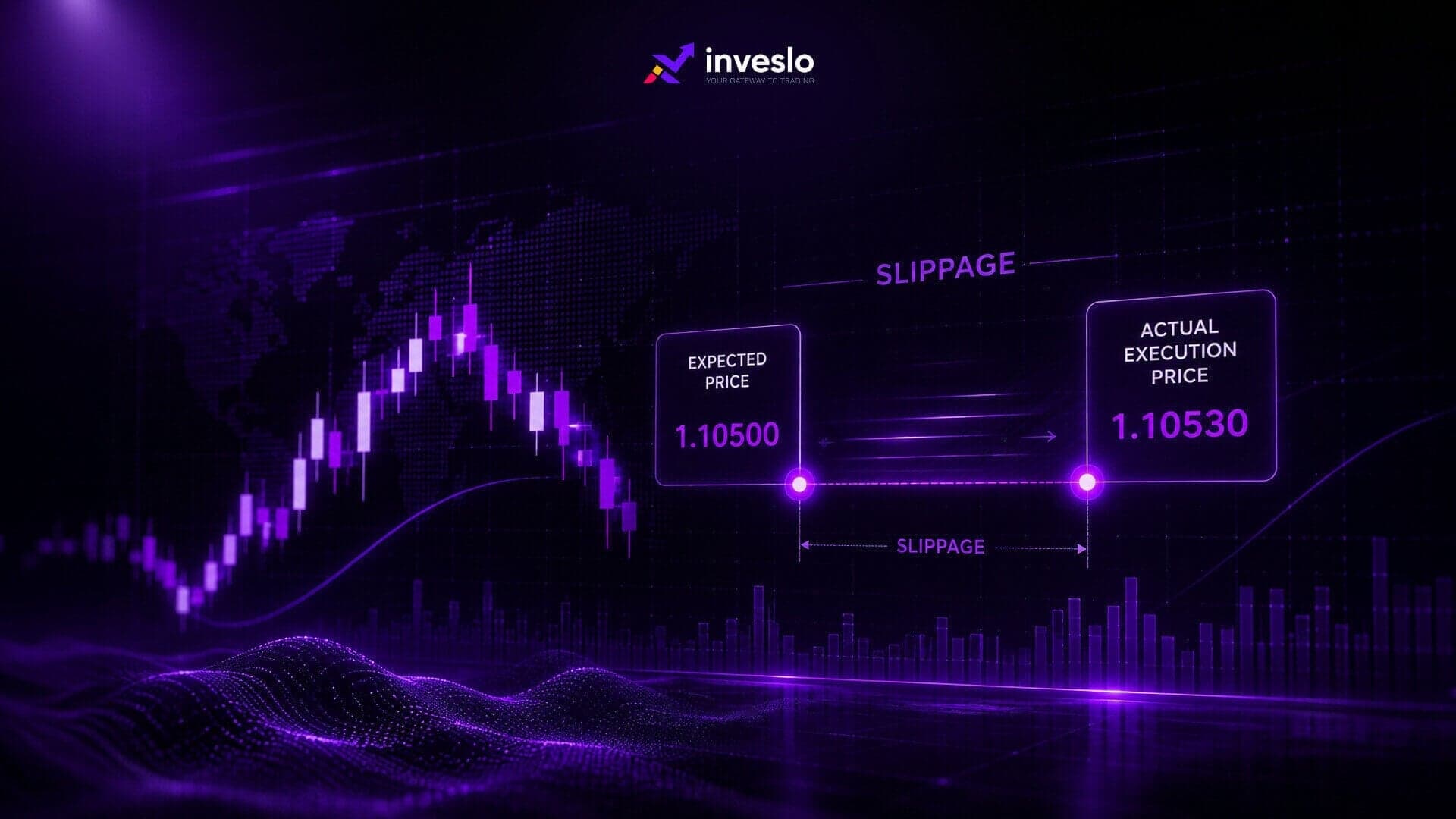
Slippage in Trading: What it is and How to Reduce it?
Slippage in trading costs most retail traders more than they realise, and it's rarely discussed until after the damage is done. You place an order at one price, it fills at another, and suddenly your trade is already underwater before the market's moved a tick against you. It happens fast.