
Most traders spend years searching for the perfect entry signal when the real edge was simpler all along. A trend trading strategy doesn't require you to predict where prices are going. It requires you to notice where they're already going and get on board. And that distinction, as basic as it sounds, is what separates systematic traders from reactive ones.
This guide covers how to identify trends, which tools hold up under real conditions, and how to protect your capital when a trade goes wrong.
What Is a Trend Trading Strategy?
At its core, a trend trading strategy involves entering trades in the same direction as the prevailing market move, then holding that position until clear evidence of a reversal appears. You're not forecasting. You're observing.
A trend has three states. An uptrend forms when price makes higher highs and higher lows consistently. A downtrend forms when price makes lower highs and lower lows. A sideways or ranging market, which isn't suitable for trend trading, forms when neither condition holds.
This is where a lot of beginners stumble. A pullback is a temporary counter-move within the trend. A reversal is a structural shift where price breaks the sequence of highs and lows entirely. Treating a pullback as a reversal is one of the most common reasons traders exit profitable positions too early, and it's almost always a costly mistake.
Key insight: Trends exist across all timeframes. A daily chart uptrend can coexist with a four-hour pullback. Always confirm which timeframe is driving your trade decision before you act.
How to Identify Market Trends
Learning to identify market trends accurately is the skill that separates systematic traders from those reacting to noise. Three practical methods are worth building into your process.
1. Price Structure Analysis
Price structure is the most direct method. Mark your swing highs and swing lows on the chart. If each successive high is higher than the last, and each successive low is also higher, you're in an uptrend. No indicator required. This approach works across forex, commodities, and indices, and it's the foundation everything else gets layered on top of.
2. Moving Averages
A moving average, which calculates the average closing price over a set number of periods to smooth out short-term noise, gives you a visual trend filter. The 50-period and 200-period moving averages are widely used. When price trades above the 200-period moving average, the long-term trend is considered bullish. Below it, bearish. But where price sits relative to the line is only half the picture. The direction the moving average itself is pointing matters just as much.
3. The ADX Indicator
The Average Directional Index, or ADX (a momentum indicator that measures trend strength on a scale of 0 to 100), tells you how strong a trend is, not which direction it's heading. An ADX reading above 25 generally indicates a trend worth trading. Below 20, the market is likely ranging, and trend strategies tend to underperform pretty badly in those conditions.
Core Tools for Trend Following Strategy
A trend following strategy relies on a defined toolkit. Below is a comparison of the most commonly used trend tools, what each measures, and where each has limitations.
|
Tool |
What It Measures |
Best Used For |
Limitation |
|
50/200 MA Crossover |
Direction of medium/long-term trend |
Entry signal confirmation |
Lags price; late signals in fast markets |
|
ADX |
Trend strength |
Filtering ranging vs. trending markets |
Gives no directional bias on its own |
|
Trendlines |
Structural support and resistance |
Visualising trend channels |
Subjective; different traders draw them differently |
|
RSI (14) |
Momentum relative to recent range |
Spotting pullbacks within a trend |
Can stay overbought in strong uptrends |
|
Bollinger Bands |
Volatility around a moving average |
Identifying breakouts at trend starts |
Generates false signals in choppy conditions |
No single tool is reliable on its own. A 2025 CME Group report on retail trader behaviour found that traders combining at least two non-correlated indicators had measurably lower false-signal rates than those relying on just one. The practical takeaway is straightforward: use one trend direction tool and one trend strength tool together, not five indicators that all measure the same thing.
How to Build a Trend Trading Plan
A plan removes guesswork at exactly the moment when guesswork is most tempting. Build yours around four sequential steps.
- Confirm the trend exists. Use price structure and a moving average to verify the market is actually trending, not ranging.
- Wait for a pullback entry. Entering at the peak of a trend move increases your risk immediately. Wait for price to retrace toward a key level (a previous swing high turned support, or a moving average) before entering.
- Define your invalidation point. Before entering, decide exactly where you are wrong. A stop-loss, which is an order that automatically closes your trade at a pre-set loss level, should sit just beyond the structure level that would disprove your trend thesis.
- Set a target or a trailing stop. Either target a specific level (the next area of resistance) or use a trailing stop-loss, one that moves with price as it advances, to capture an extended move without capping your upside.
For context, traders using structured entry criteria on GBP/USD during the sustained dollar strength phase of 2024 to 2025 found that pullback entries near the 50-period moving average produced significantly better reward-to-risk ratios than breakout entries at new highs. Entry timing matters more than most traders expect.
Brokers that offer reliable order execution and clear charting tools make following these steps considerably more straightforward. Inveslo, for instance, provides access to the full suite of trend indicators discussed here alongside transparent execution conditions, which is useful when your strategy depends on entering at specific price levels.
Risk Management in Trend Trading
Trend trading for beginners tends to focus entirely on identifying the trend. That's understandable. But it misses the half of the equation that actually determines long-term survival.
Position sizing is the process of calculating how many units to trade so that if your stop-loss is hit, you lose only a defined percentage of your account. Most professional traders risk between 0.5% and 2% of their capital on any single trade. The exact percentage matters less than applying it consistently, every time, without exception.
Leverage, which means borrowing from your broker to control a position larger than your own capital allows, amplifies both gains and losses in equal measure. Under current ESMA rules across the EU and UK as of 2026, retail traders in forex are capped at 30:1 leverage on major currency pairs.
According to FCA research from 2025, over 70% of retail CFD accounts lose money, with excessive leverage identified as a leading contributing factor. That figure is worth sitting with before you decide how aggressively to size your positions.
Trends also end, sometimes abruptly. A trailing stop-loss protects accumulated gains without forcing you to predict exactly when the reversal will happen. When price eventually turns, the stop closes the trade automatically, so you keep most of what the trend gave you.
Key Takeaways
A trend trading strategy works because markets move in sustained directions long enough for disciplined traders to capture meaningful portions of those moves. The challenge isn't identifying the trend, it's staying systematic when short-term noise creates doubt.
- Trend confirmation: combine price structure with a moving average before committing to a trade direction
- Entry timing: wait for a pullback to a key level rather than chasing price at the extreme of a move
- Risk control: size every position so a single losing trade costs no more than 1-2% of your capital
- Trend strength: use ADX to filter out low-quality ranging environments before applying your trend trading strategy
Study the tools, build a written plan, and apply it consistently across a demo account before going live.
FAQ
Q1. What timeframe works best for a trend trading strategy?
A. Daily and four-hour charts are the most reliable for identifying trends because they filter out short-term noise. Shorter timeframes like 15 minutes generate more signals, but also more false ones. Most trend traders use a higher timeframe to confirm direction and a lower one to time entries.
Q2. How is trend trading different from swing trading?
A. Swing trading aims to capture short-term price swings over a few days, often within a broader range. Trend trading, by contrast, focuses on riding a directional move over weeks or months. The two can overlap, but the holding period and position management approach differ substantially.
Q3. Can trend following strategy work in forex markets?
A. Yes. Currency pairs frequently exhibit sustained directional moves driven by interest rate differentials, economic data, and central bank policy. The EUR/USD and USD/JPY pairs, in particular, have historically produced multi-week trends that are tradeable with standard trend following tools.
Q4. How do I know when a trend has ended?
A. A trend ends structurally when price breaks the sequence of higher highs and higher lows (in an uptrend) or lower highs and lower lows (in a downtrend). Confirm with a moving average direction change and an ADX reading falling below 20 before concluding the trend has reversed.
Related articles
 ForexInveslo
What is the Consumer Price Index (CPI)?
The Consumer Price Index (CPI) tracks the average change over time in prices consumers pay for a representative basket of goods and services. It is one of the main measures used to monitor consumer inflation.
 ForexInveslo
What is a Trading Journal & How Do Traders Use It?
A trader can remember a big winner for months and forget three poorly planned trades from the same week. That is one reason relying on memory makes trade review difficult.
 ForexInveslo
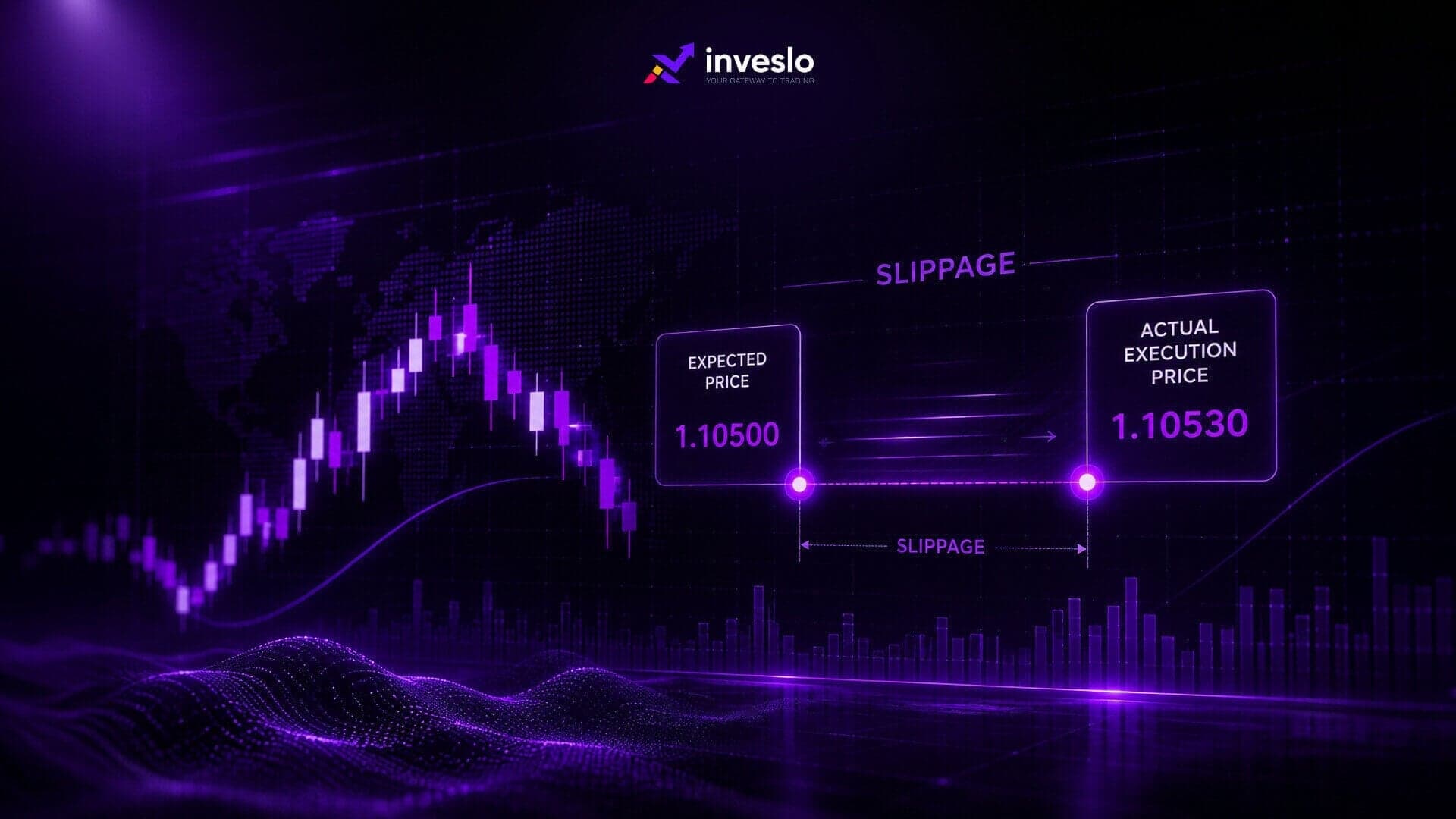
Slippage in Trading: What it is and How to Reduce it?
Slippage in trading costs most retail traders more than they realise, and it's rarely discussed until after the damage is done. You place an order at one price, it fills at another, and suddenly your trade is already underwater before the market's moved a tick against you. It happens fast.